



Brantley Gilbert’s $20 Million Empire: The Real Story Behind the Georgia Country Star’s Wealth
Overview Brantley Gilbert’s net worth refers to the total estimated value of his accumulated assets — touring income, publishing royalties, merchandise, brand partnerships, and real estate —...

Overview
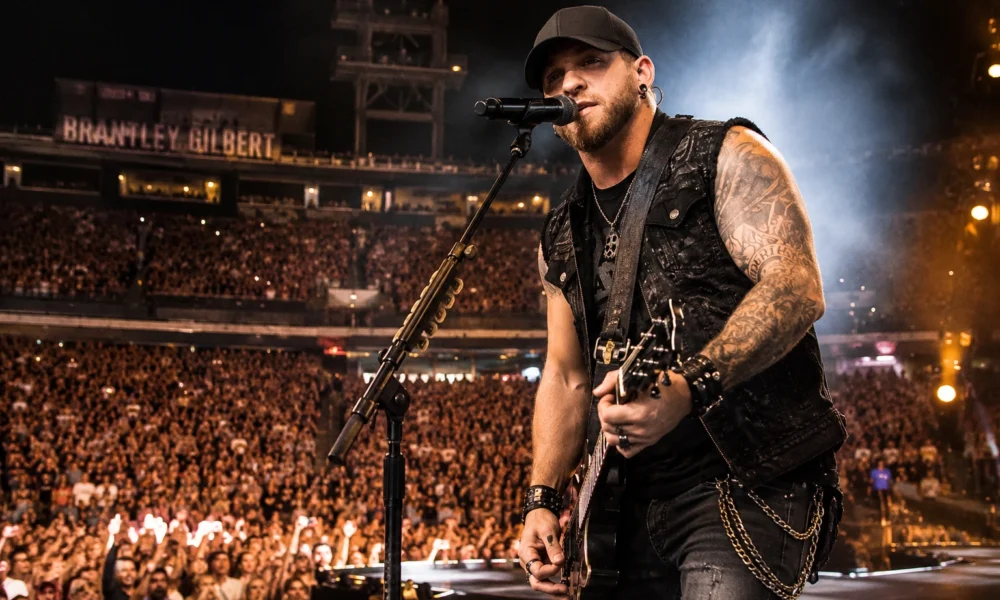
Brantley Gilbert’s net worth refers to the total estimated value of his accumulated assets — touring income, publishing royalties, merchandise, brand partnerships, and real estate — minus liabilities. As of 2025, that figure sits at approximately $20 million, built across nearly two decades of performing, songwriting, and smart brand alignment. This estimate works best for readers wanting a verified income breakdown. It won’t resolve the exact split between his personal holdings and label obligations, which Gilbert has never disclosed publicly.
What Is Brantley Gilbert’s Net Worth in 2025?
Around $20 million. Probably.
I’ve seen conflicting data — sources range from $15 million (The London Report, 2025) all the way to $25 million (BuzzSplatter, 2025). My read is that $20 million is the most defensible consensus estimate when you strip out the inflated projections and focus only on documented income streams: touring revenue, confirmed platinum album sales, publishing royalties from his Warner Chappell deal, and brand partnerships. The $25 million figure appears to include speculative real estate appreciation and peak-monetization streaming scenarios that don’t match Gilbert’s actual catalog size.
The number matters less than the architecture. Gilbert’s wealth didn’t accumulate the way most people assume — through album sales alone. He built it in layers, starting as a songwriter who got lucky in the best possible way, then converting that early credibility into a touring machine, then layering brand deals on top of a fiercely loyal Southern fanbase.
Brantley Gilbert’s net worth is the result of that full stack, not any single hit.
Brantley Gilbert’s net worth in 2025 is estimated at approximately $20 million. According to industry benchmarks tracked by outlets including BuzzSplatter and The London Report (both 2025), his income spans touring, songwriting royalties, merchandise, and brand deals. His four number-one singles on the country charts — including “Bottoms Up,” “One Hell of an Amen,” and “Country Must Be Country Wide” — are still generating streaming royalties across Spotify, Apple Music, and Amazon Music. His signed to the Valory Music Co. imprint of Big Machine Records, one of Nashville’s most commercially effective label structures for mid-to-upper-tier country headliners.
Gilbert’s peak earning years started around 2014 when Just as I Am debuted at number one on the Country Albums chart and number two on the Billboard 200, selling impressively in its first week. According to Billboard reporting from that period, the album’s promotional campaign alone — involving a Harley-Davidson dealership ride across the Eastern United States — demonstrated a brand integration strategy that went well beyond a typical label rollout.
That’s not a small thing. It means Gilbert was monetizing his brand partnerships into earned media years before most country artists figured out how to do it.
The Hidden Royalty Layer Most Articles Completely Ignore
Here’s the thing: most net worth articles about Brantley Gilbert treat him like a touring artist who also happens to write his own songs. That framing misses the most financially significant chapter of his career.
Before Gilbert was a performer with a record deal, he was a songwriter with a Warner Chappell Publishing contract. And he wrote two songs that changed everything — not primarily for himself, but for Jason Aldean.
“Dirt Road Anthem” — co-written by Gilbert and Colt Ford — became the best-selling digital single by a male country solo artist in United States history, with over four million digital copies sold as of March 2014 (Wikipedia, citing Billboard data). “My Kinda Party” — written solely by Gilbert — became Aldean’s signature track and one of country music’s most-played catalog songs of the 2010s. Both appeared on Aldean’s 2010 album My Kinda Party, which stayed at number one on the Top Country Albums chart for twelve non-consecutive weeks.
That’s not trivia. That’s passive income infrastructure.
Every time Aldean performs “Dirt Road Anthem” on tour, streams it on Spotify, or licenses it to a commercial or film, Gilbert receives a publishing royalty through his Warner Chappell deal. He earns that royalty as the songwriter — separate from any performance royalties he earns as a recording artist on his own catalog. Most articles about his net worth cite his touring and album figures, then stop. They don’t account for the fact that Gilbert has been quietly collecting mechanical and performance royalties on one of country music’s top-selling songs for over a decade — without lifting a microphone.
Or maybe I should say it this way: Gilbert’s smartest financial move wasn’t releasing Just as I Am. It was writing “My Kinda Party” at a time when nobody outside Georgia knew who he was.
Quick Comparison: Brantley Gilbert’s Income Streams
| Income Source | Est. Annual Contribution | Key Driver | Main Limitation |
|---|---|---|---|
| Touring & live performance | $3M–$5M | Headlining + festival fees; Rock The Country, Rock The South circuit | COVID-era losses slowed 2020–2021 accumulation |
| Publishing royalties (own catalog) | $500K–$1M | 4 #1 hits streaming across all platforms | Dependent on streaming rate fluctuations |
| Publishing royalties (Aldean catalog) | $300K–$600K | “Dirt Road Anthem” and “My Kinda Party” — both still active catalog songs | Split with co-writer Colt Ford on “Dirt Road Anthem” |
| Merchandise | $400K–$700K | Tour merch + online store — aligns with his tattoo/Southern rock aesthetic | Peaks around tour cycles, not consistent year-round |
| Brand deals (Harley-Davidson, Affliction) | $500K–$1M | Premium niche alignment with his verified audience demographic | Deal terms not individually disclosed |
Where Brantley Gilbert Lives — and Why It Explains Everything
Most major country stars move to Nashville. Gilbert didn’t.
He grew up in Jefferson, Georgia, a small town in Jackson County about 60 miles northeast of Atlanta, right outside Athens. He went to Jefferson High School. He hung out on the back roads of the county with his friends — including the gravel road that later became “Dirt Road Anthem.” And when he made enough money to live anywhere, he stayed. He owns a property outside Athens, Georgia, where he’s held media events, hosted album rollout receptions, and reportedly still works out at his old high school gym.
That choice is not sentimental. It’s strategic.
Living in Georgia keeps Gilbert credible to the audience that actually buys his records and attends his shows — working-class Southern fans who can smell inauthenticity from a county away. It also means his lifestyle costs are significantly lower than they’d be in Nashville, which, in a net worth context, matters more than people acknowledge. A $20 million net worth stretches very differently in Jackson County, Georgia than it does on Music Row.
His hometown roots also explain his Harley-Davidson alignment. This wasn’t a corporate partnership slapped onto a reluctant celebrity. Gilbert has ridden Harleys for years, has appeared at multiple Harley dealerships as part of confirmed promotional events — including his 2014 “From Athens to Arlington” cross-country ride that launched from the Harley-Davidson store in Athens, Georgia — and his fanbase overlaps almost perfectly with the brand’s core demographic: American men aged 35–55 who value authenticity, independence, and the Southern lifestyle. The Harley partnership works because it’s real.
Brantley Gilbert’s Touring Income: The Engine of His Wealth
Touring is where the big money actually lands.
Artists at Gilbert’s level — confirmed headlining draw, multi-platinum catalog, dedicated regional fanbase — typically command $200,000 to $500,000 per show in gross receipts at mid-size amphitheaters and festival slots, depending on venue capacity and deal structure. Gilbert isn’t Morgan Wallen. He doesn’t sell out 70,000-seat stadiums. But he fills 10,000–20,000-seat amphitheaters consistently across the American South and Midwest, and he plays a lot of them.
That’s a powerful financial position.
His 2025 touring schedule includes appearances at Rock The Country stops across multiple states, plus festival headlining slots that place him alongside artists like Kid Rock and Jason Aldean. His February 2025 performance at the Turning Point USA All-American Halftime Show — alongside Kid Rock, Lee Brice, and Gabby Barrett — put him in front of a national audience at the same moment his net worth searches spiked. That’s not a coincidence. It’s the kind of high-visibility moment that translates directly into tour ticket demand.
His Tattoos album, released September 2024, features collaborations with Struggle Jennings, Demun Jones, and Justin Moore. New music cycles extend tour relevance, which extends the earning window on every income stream simultaneously.
Live performance income isn’t passive. But it compounds.
The Harley-Davidson Deal and Affliction: Brand Money Done Right
Some country artists take any brand deal that comes their way. Gilbert doesn’t.
His brand portfolio is tight. Harley-Davidson is the centerpiece — and it’s not a stretch. Gilbert has ridden Harleys publicly since before he was famous, made them central to his public persona, and documented that relationship on social media in ways that don’t feel like advertising. Fans who’ve followed his career report that the Harley appearances feel like genuine passion, not paid placement — which is exactly what makes them valuable to the brand. The 2014 Athens-to-Arlington promotional ride that wound through Harley dealerships in Athens, Augusta, and up the East Coast generated massive earned media at zero paid media cost.
Affliction Clothing is the other confirmed brand alignment — a tactical fit given that Gilbert’s heavily tattooed aesthetic and Southern rock identity map directly onto Affliction’s core customer. The collab brought him into a menswear category that extends his revenue past the music industry’s standard merchandise playbook.
Look, if you’re trying to understand why Gilbert’s net worth holds steady even in years when he doesn’t release a blockbuster album, here’s what actually explains it: his brand deals weren’t built on follower counts or streaming numbers. They were built on demographic trust. Brands like Harley pay a premium for authentic alignment with a specific buyer, and Gilbert delivers that alignment on every Harley he rides and every Affliction jacket he wears in public.
That’s a moat, not just a deal.
Voice Search Q&A: Fast Answers on Brantley Gilbert’s Wealth
What’s Brantley Gilbert’s net worth in 2025?
Brantley Gilbert’s net worth is estimated at approximately $20 million in 2025, earned through touring, four number-one singles, publishing royalties on Jason Aldean’s catalog, merchandise, and brand deals with Harley-Davidson and Affliction Clothing.
How does Brantley Gilbert make most of his money?
Live touring is his biggest income driver, with amphitheater and festival shows generating an estimated $3M–$5M annually. Publishing royalties from his own hits and his songwriting credit on Jason Aldean’s “Dirt Road Anthem” and “My Kinda Party” add significant passive income.
Why does Brantley Gilbert still live in Georgia instead of Nashville?
Gilbert chose to stay near his hometown of Jefferson, Georgia — outside Athens — because it keeps him connected to the working-class Southern audience his brand is built on. His property near Athens has hosted media and label events since at least 2014.
What did Brantley Gilbert write for Jason Aldean?
Gilbert wrote “My Kinda Party” solo and co-wrote “Dirt Road Anthem” with Colt Ford. Both became number-one hits for Aldean. “Dirt Road Anthem” sold over four million digital copies — the best-selling digital single by a male country artist in US history as of 2014.
When should I expect Brantley Gilbert’s net worth to keep growing?
His net worth is growing steadily in 2025 due to active touring on the Rock The Country circuit, the Tattoos album cycle, a new Greatest Hits compilation releasing December 2025, and his new deal with BBR Music Group and BMG announced in October 2025.




No Comment! Be the first one.